Atlas · v3.19 · DCIM · IPAM · NMS
Atlas is an on‑prem platform for documenting, capacity‑planning, and operating multi‑site networks: physical DCIM, IPAM, WAN circuits, CDP/LLDP discovery, and live monitoring — one console for the holding. This catalog shows product surfaces only. Implementation stays private.
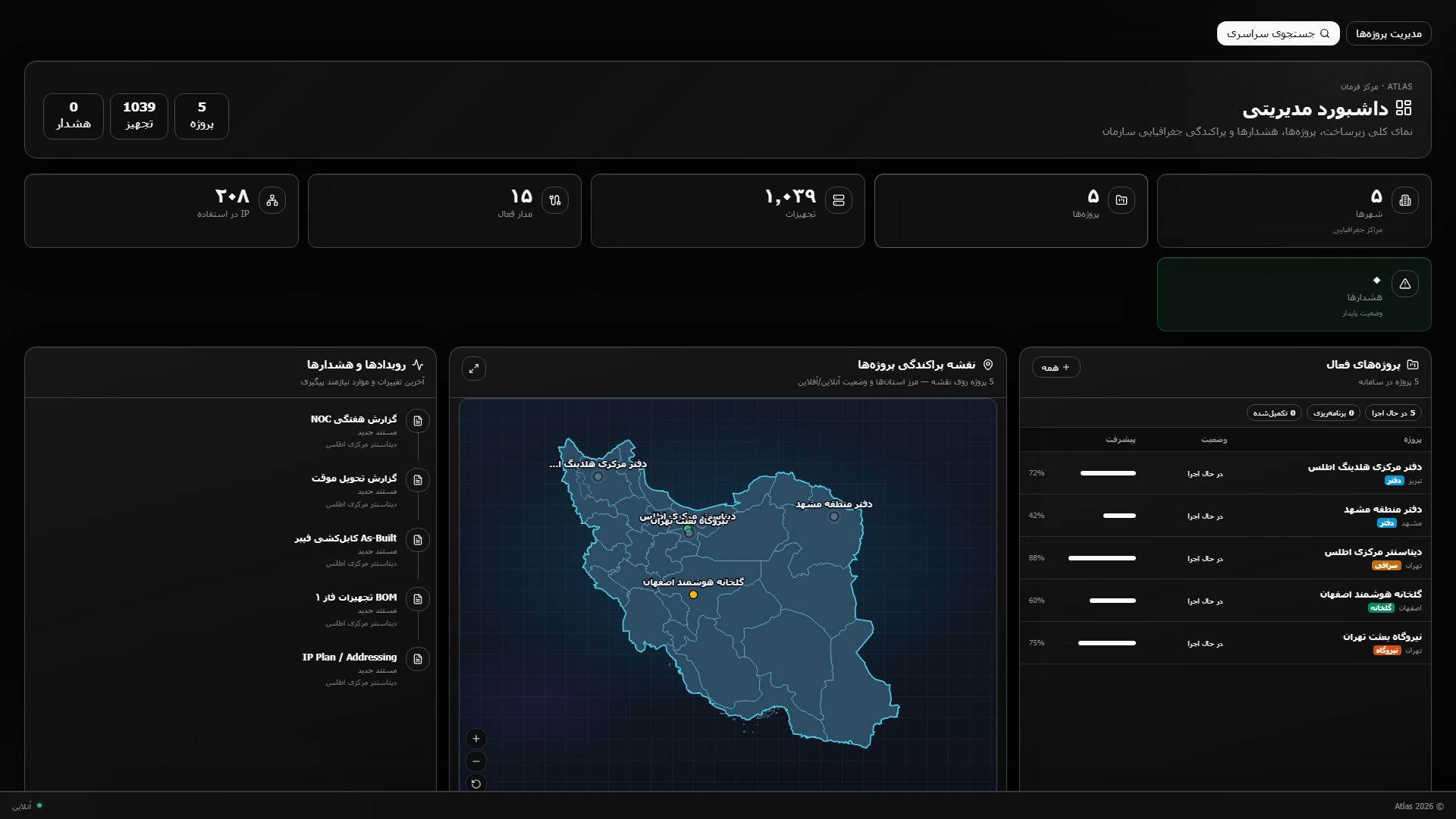
Large KPIs, status color, and a national map with pins per city — so leadership sees which site needs attention without opening a rack.

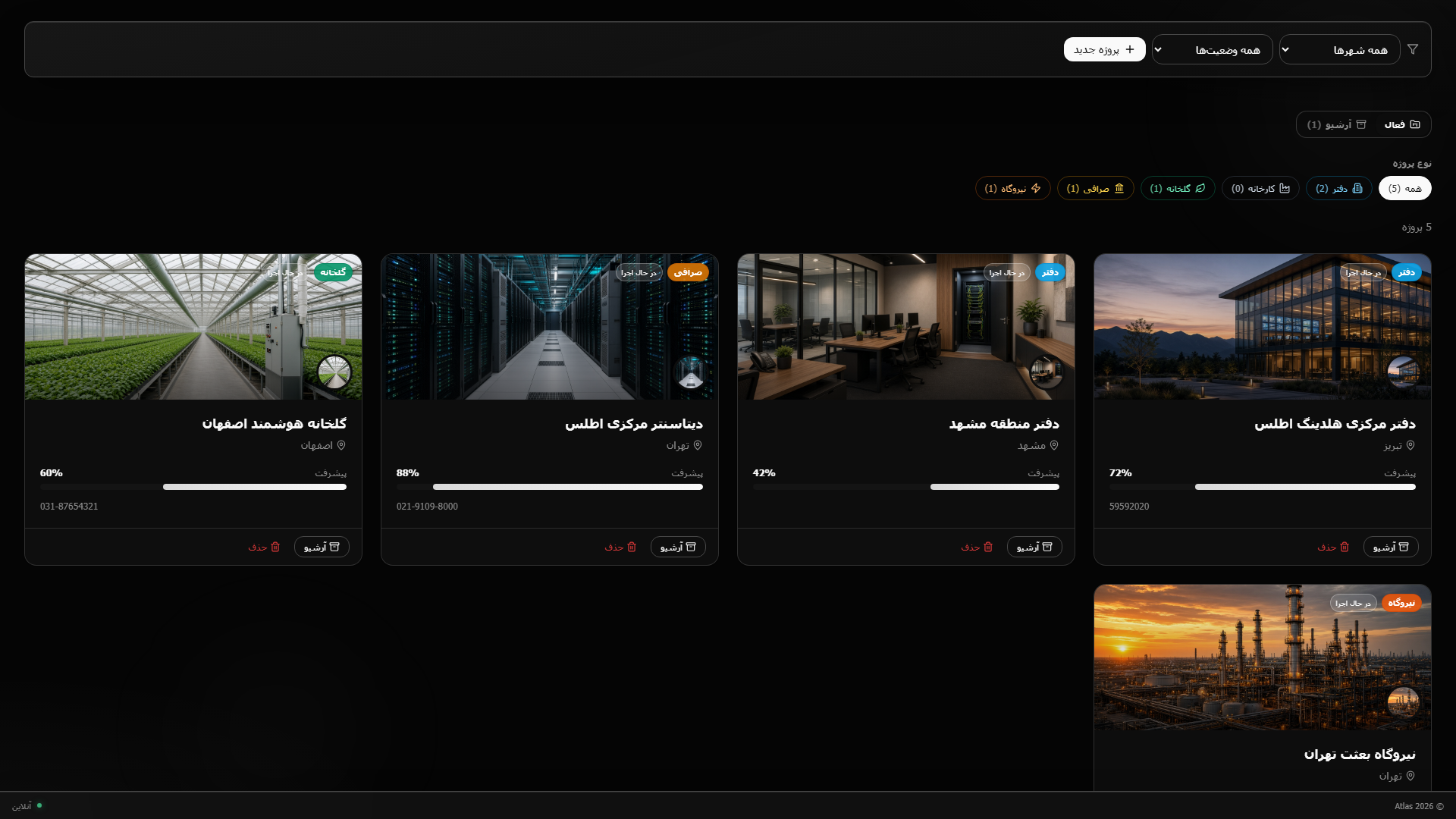
Five active sites · alerts, assets, and circuits at a glance.
Holding-scale portfolio: Tehran datacenter, Tabriz HQ, remote plant, smart greenhouse, and regional office — site identity from the real scene, not a switch faceplate.

Filters by site type, execution status, and progress.
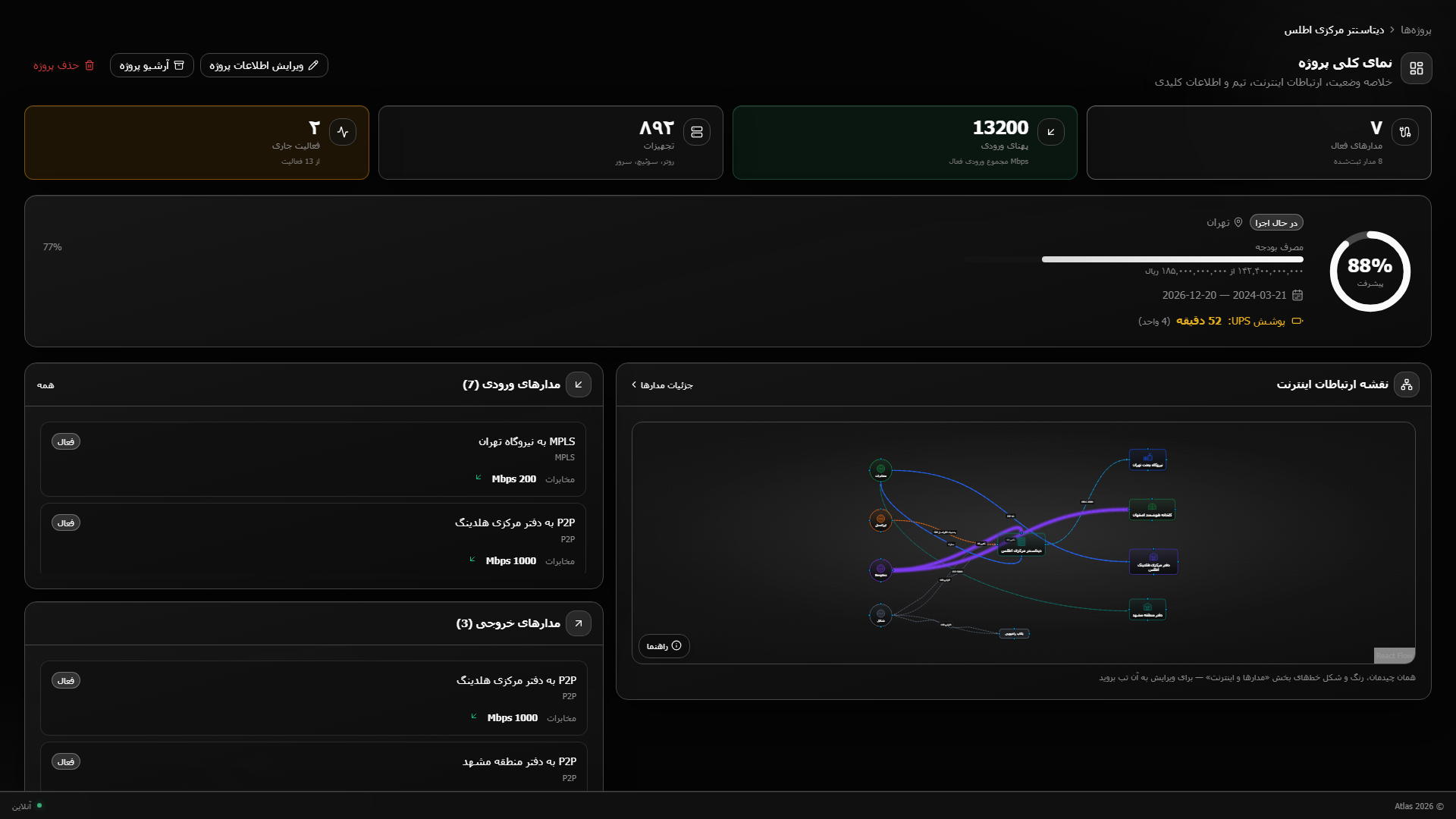
An executive page for the project lead: physical capacity, network, and finance in one view.

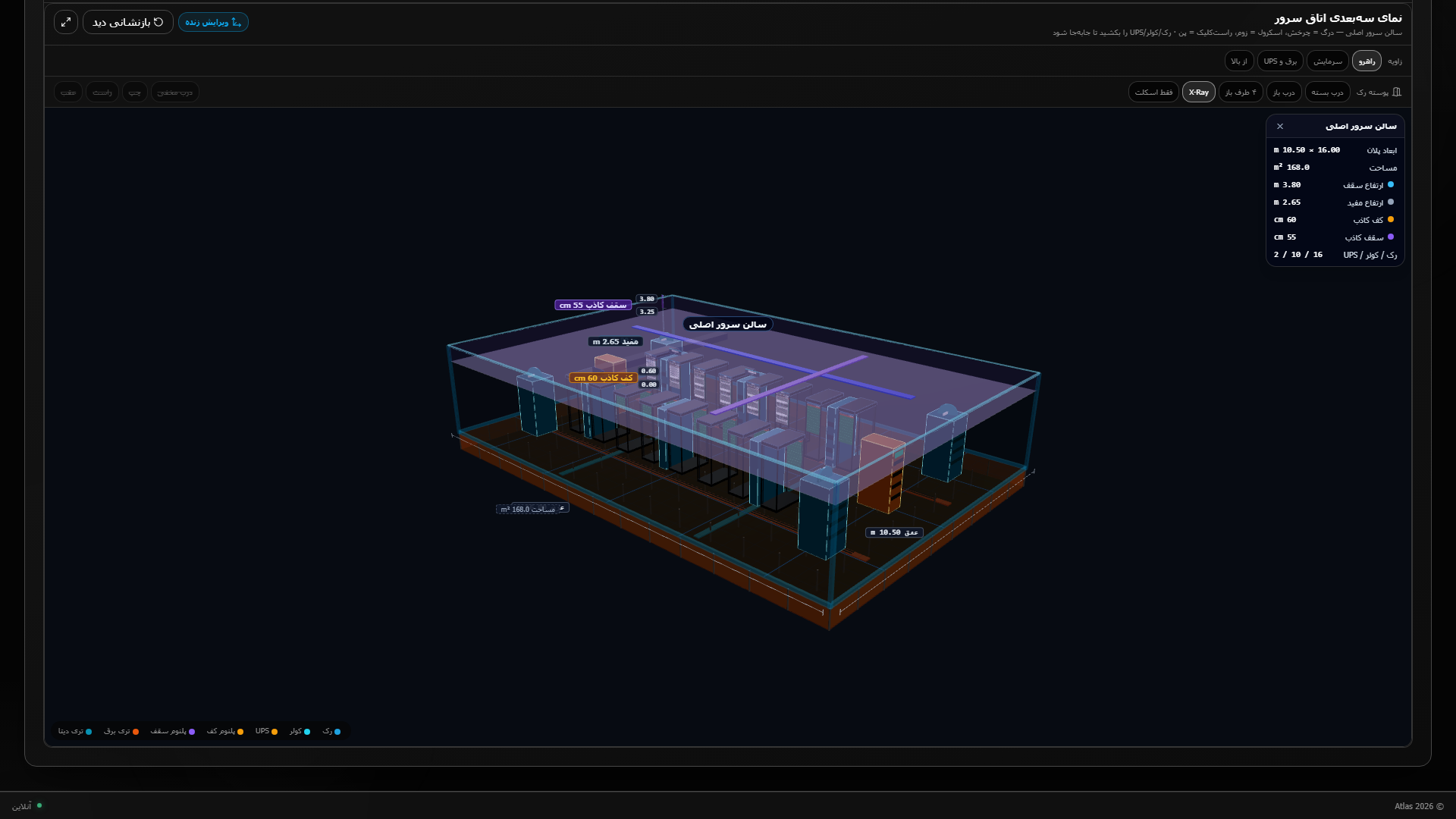
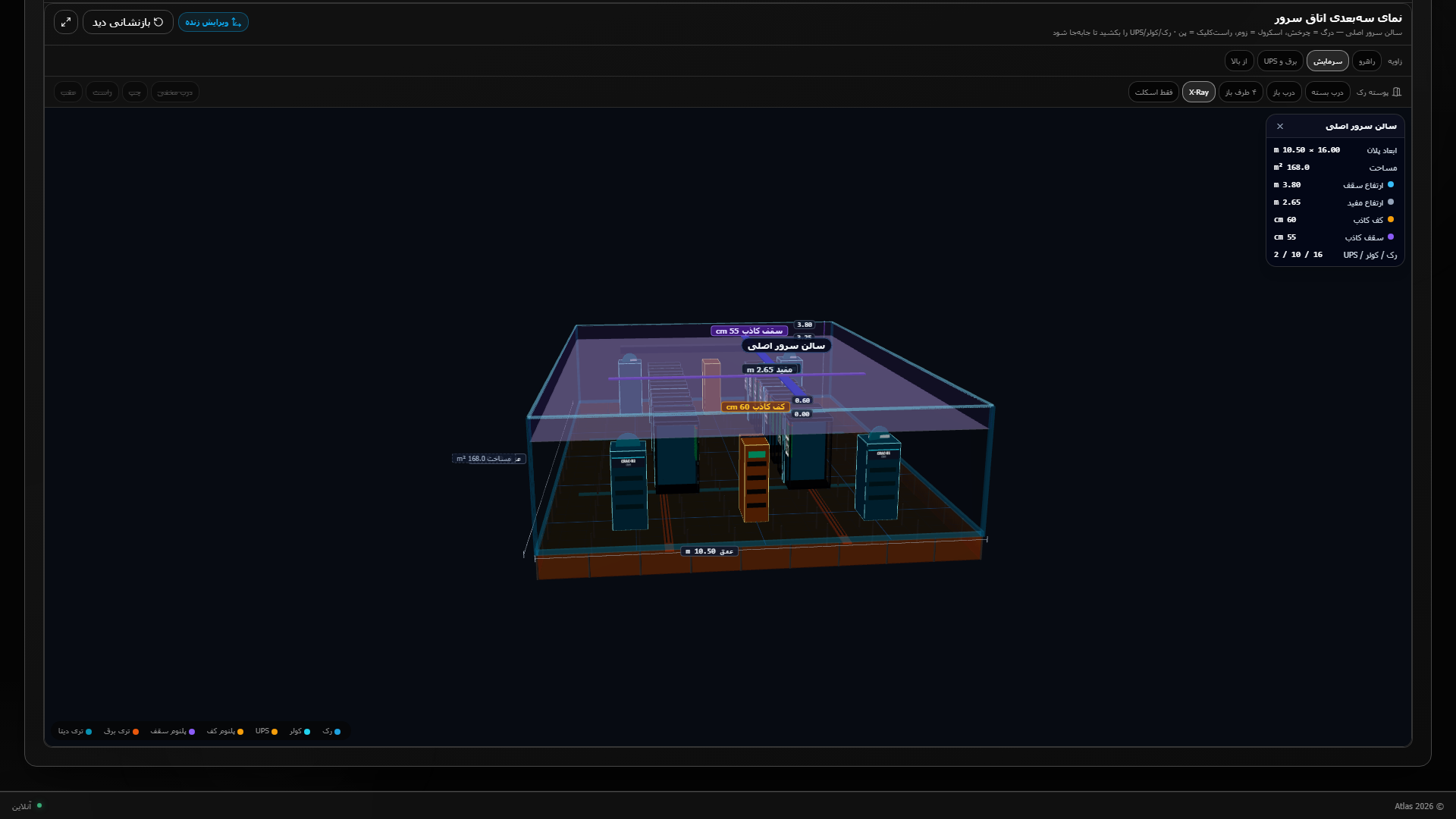
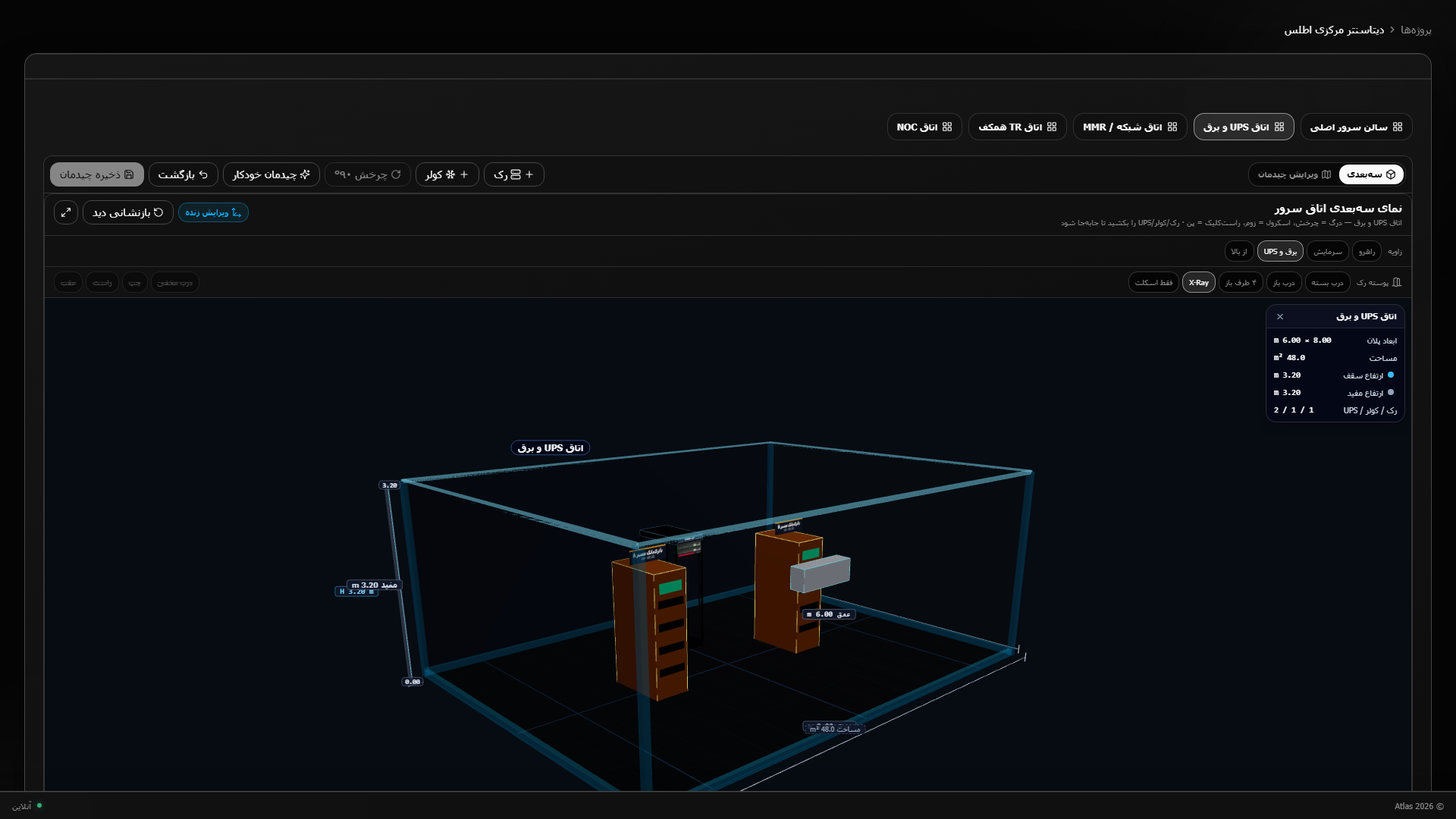
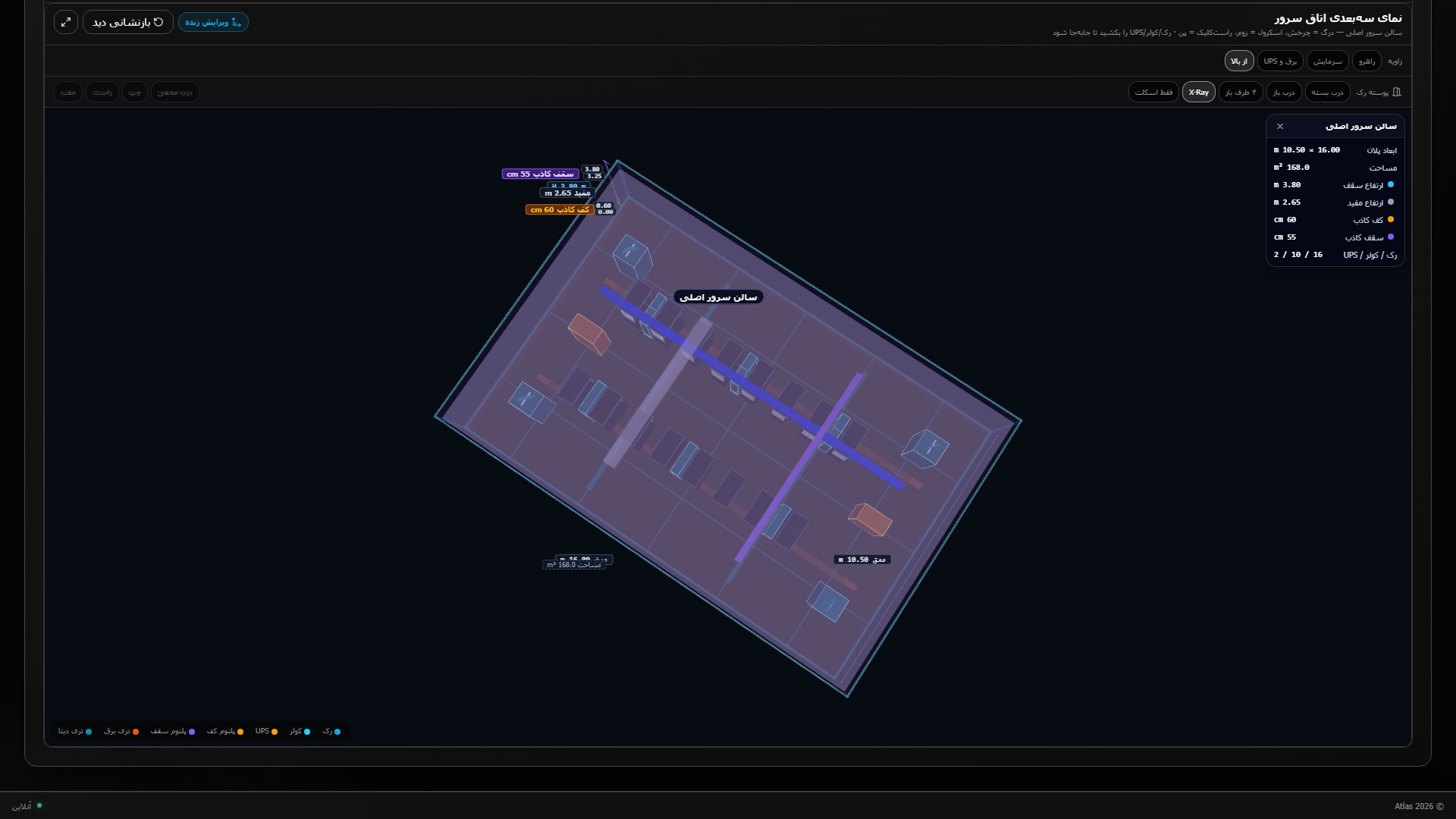
Walk the room before you walk the floor — cooling, UPS, and top-down layout for capacity conversations.


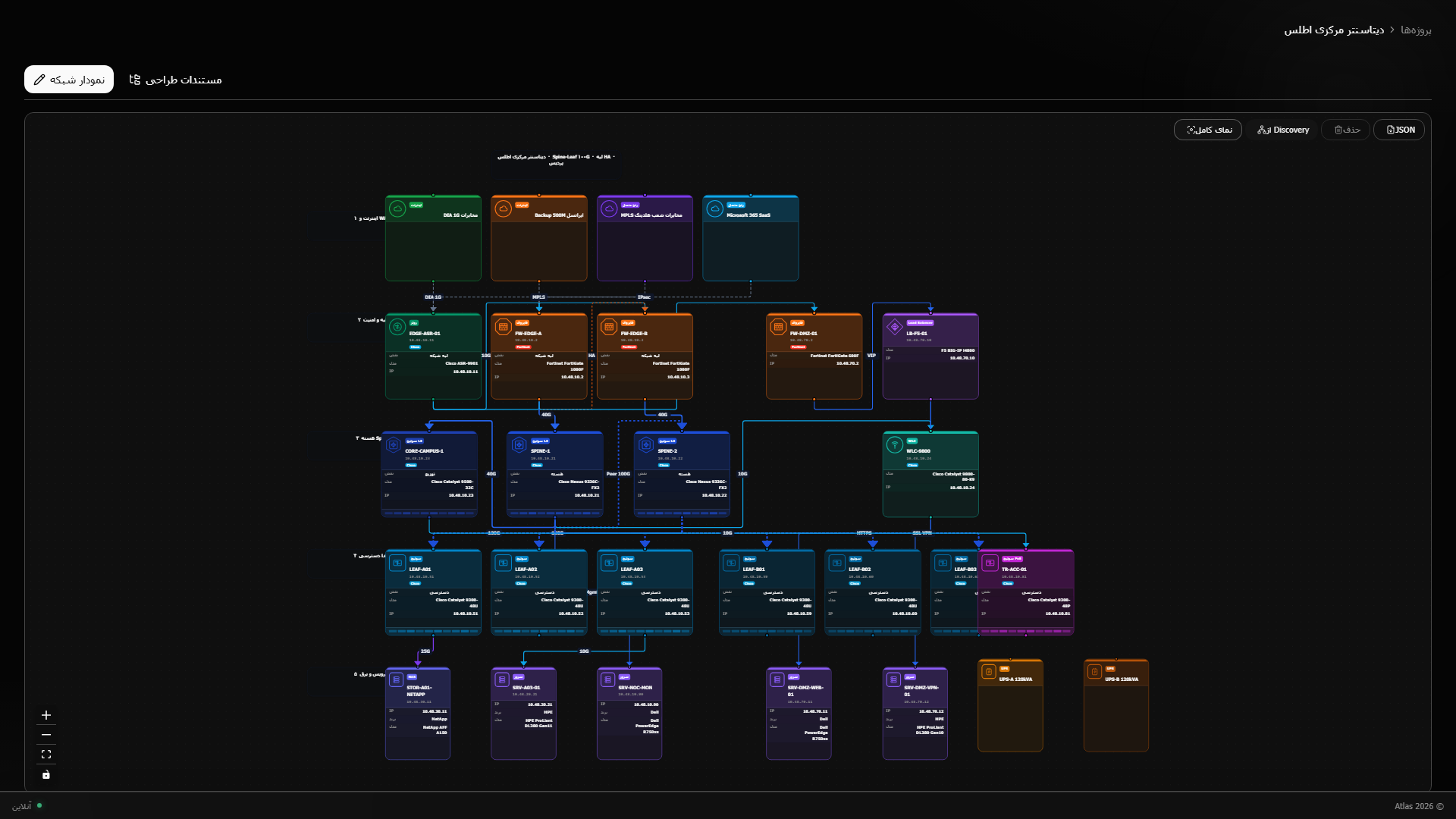
Five clear layers from WAN edge to leaf — built for operators, not a spaghetti diagram.

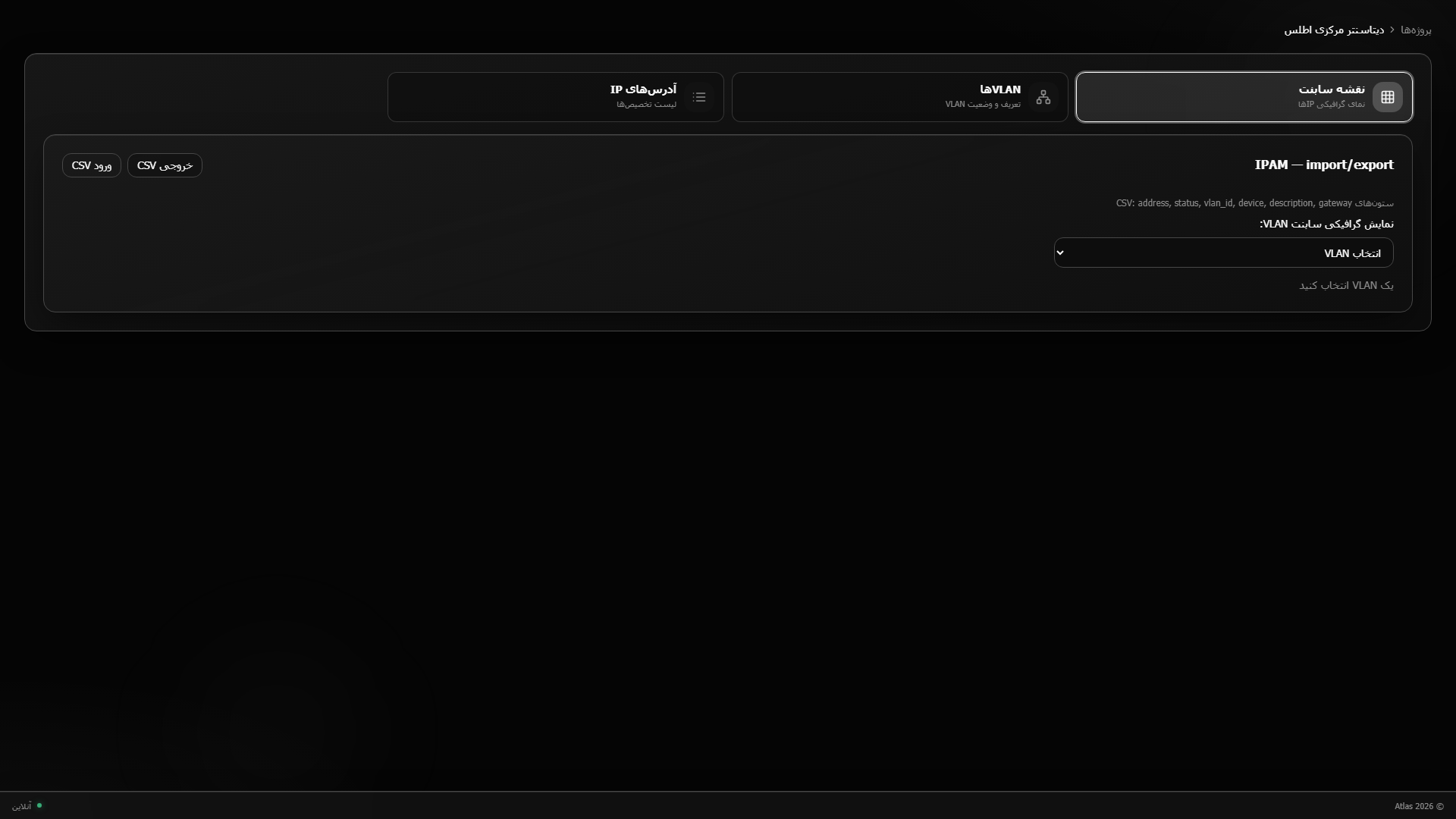
Subnet roles, utilization, and VLAN intent in one inventory.

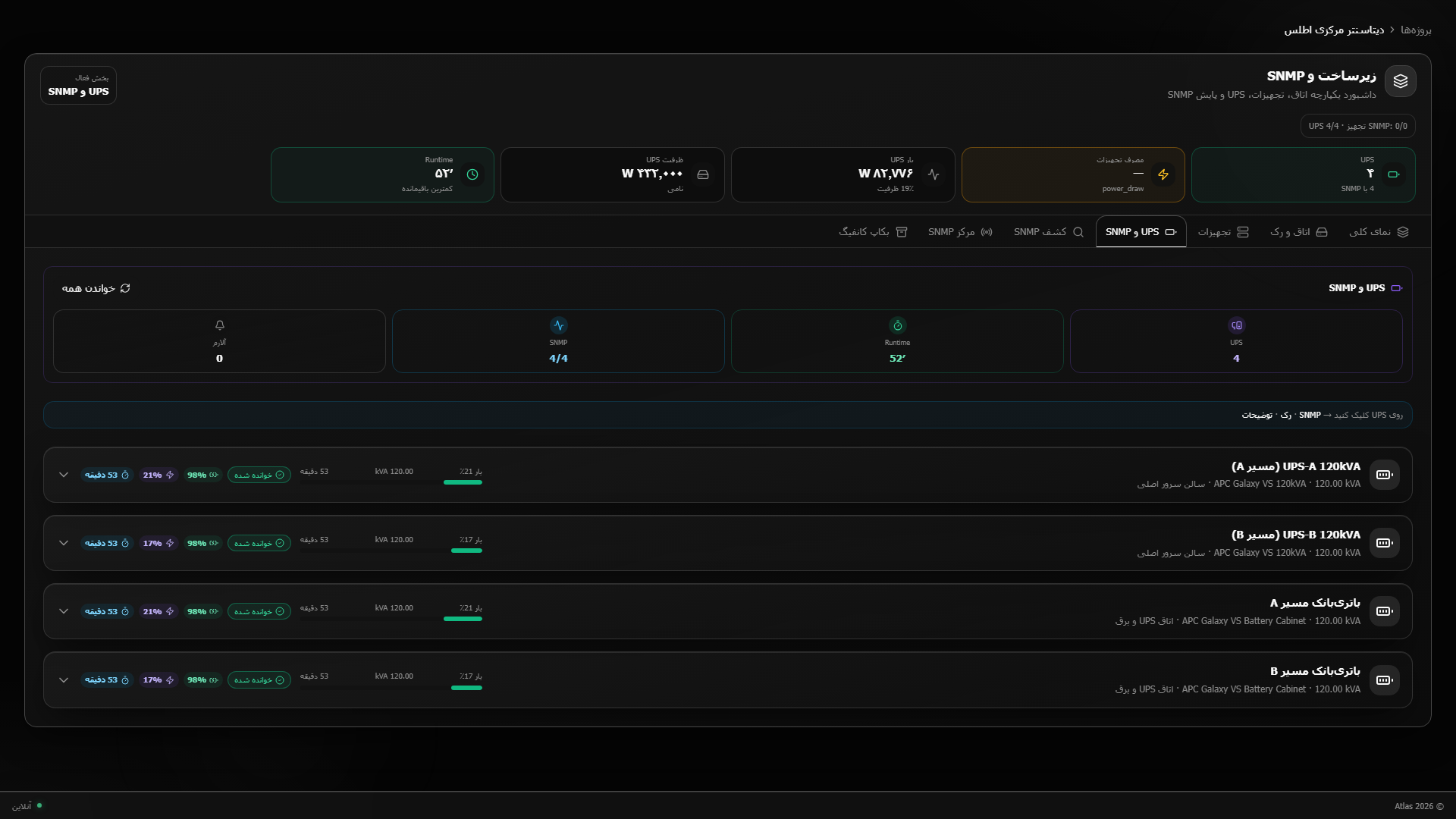
Dual-path A/B visibility for power conversations with facilities and NOC.

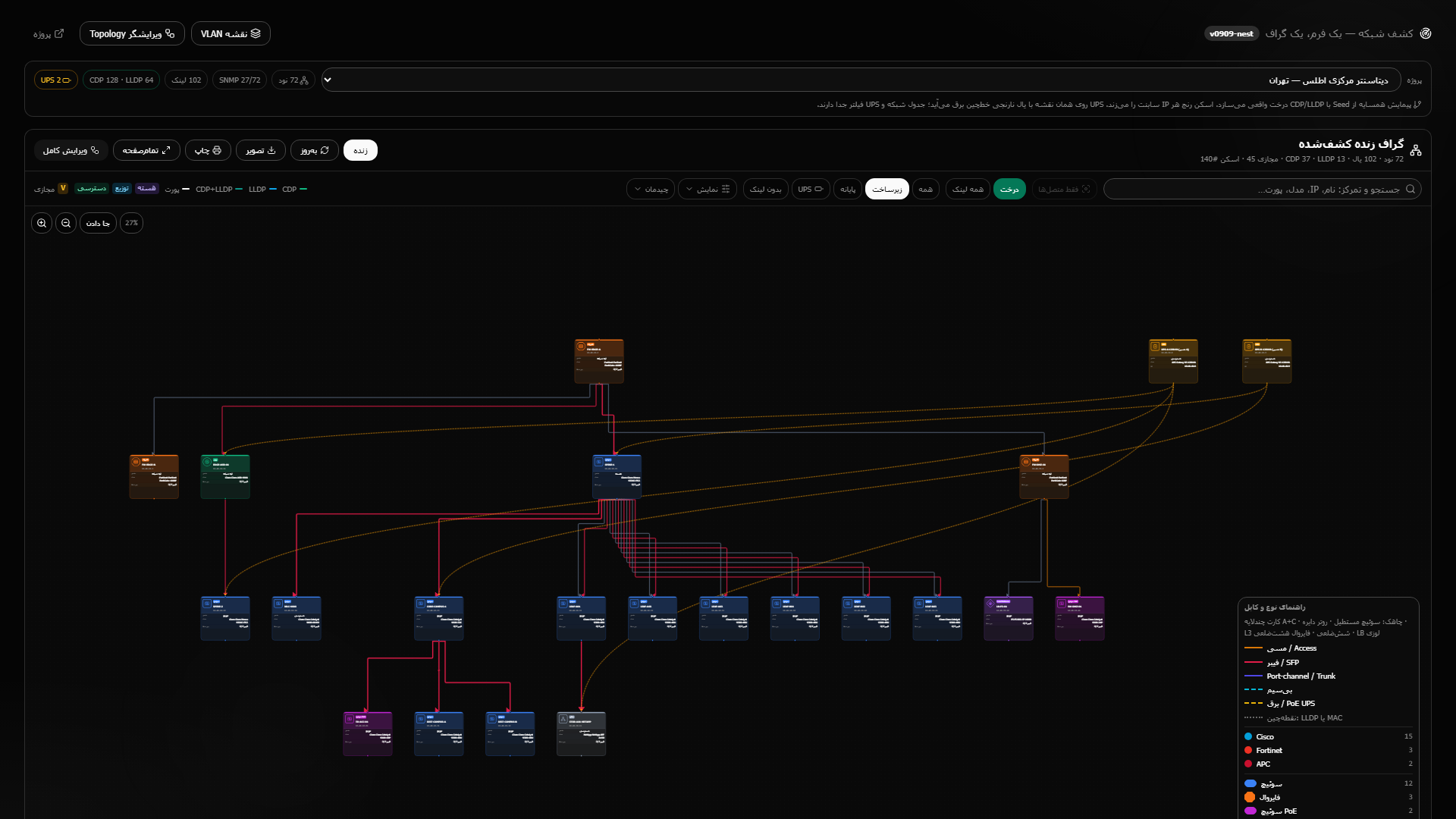
Walk the datacenter fabric and keep the as-built map honest.

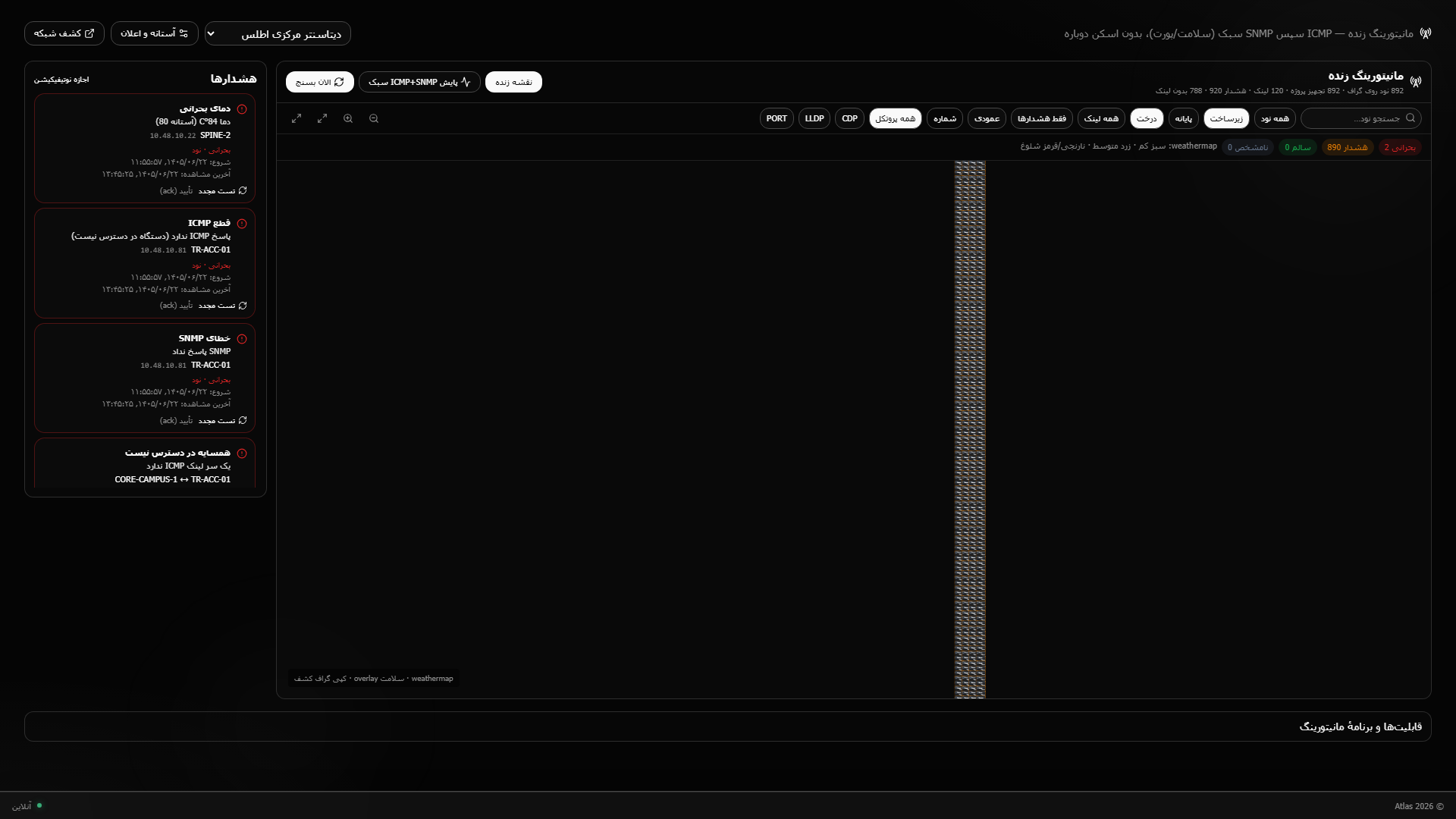
Outage, threshold, and healthy states on the same operational graph.

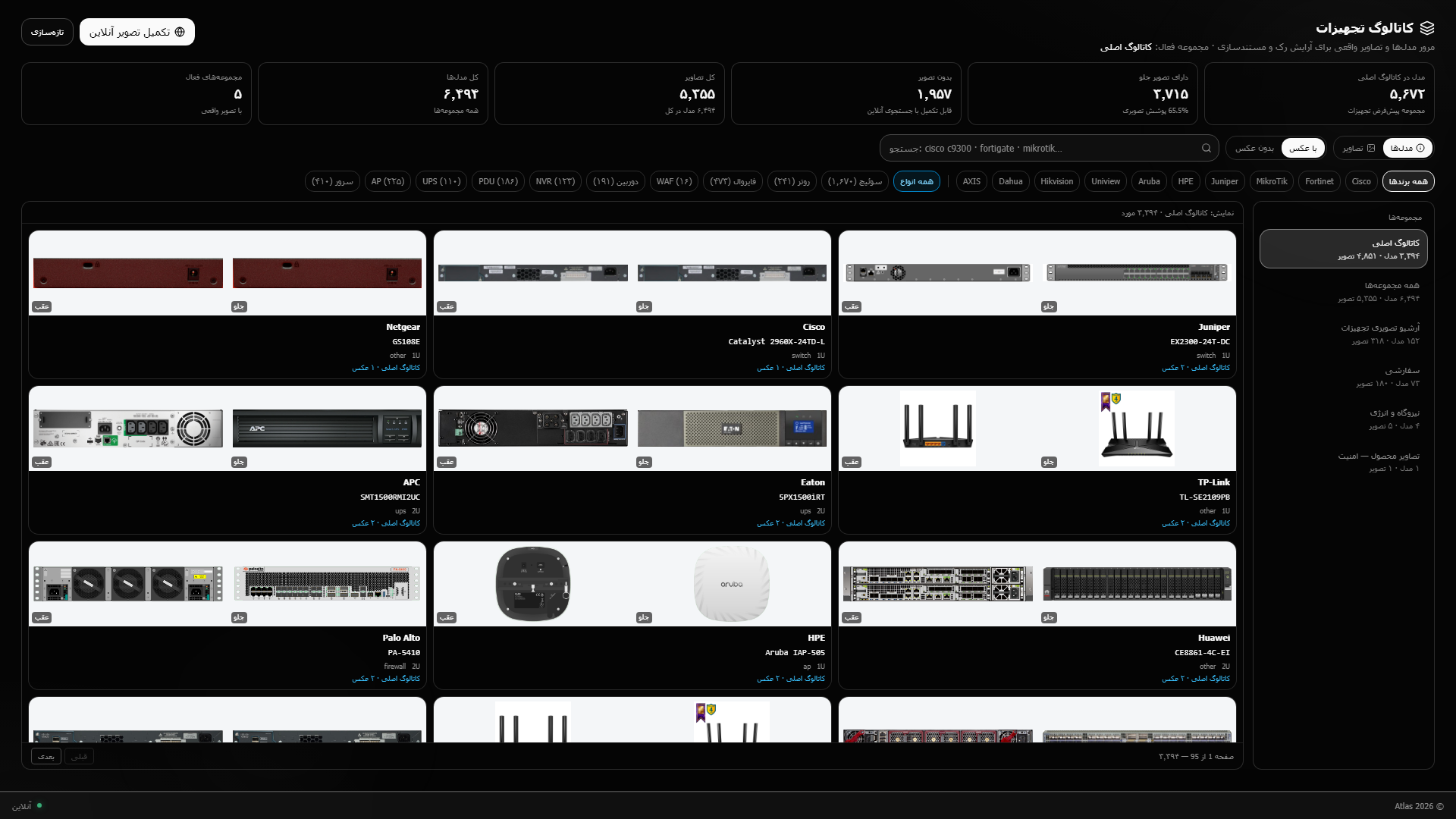
A model library with product photography for planning and documentation.

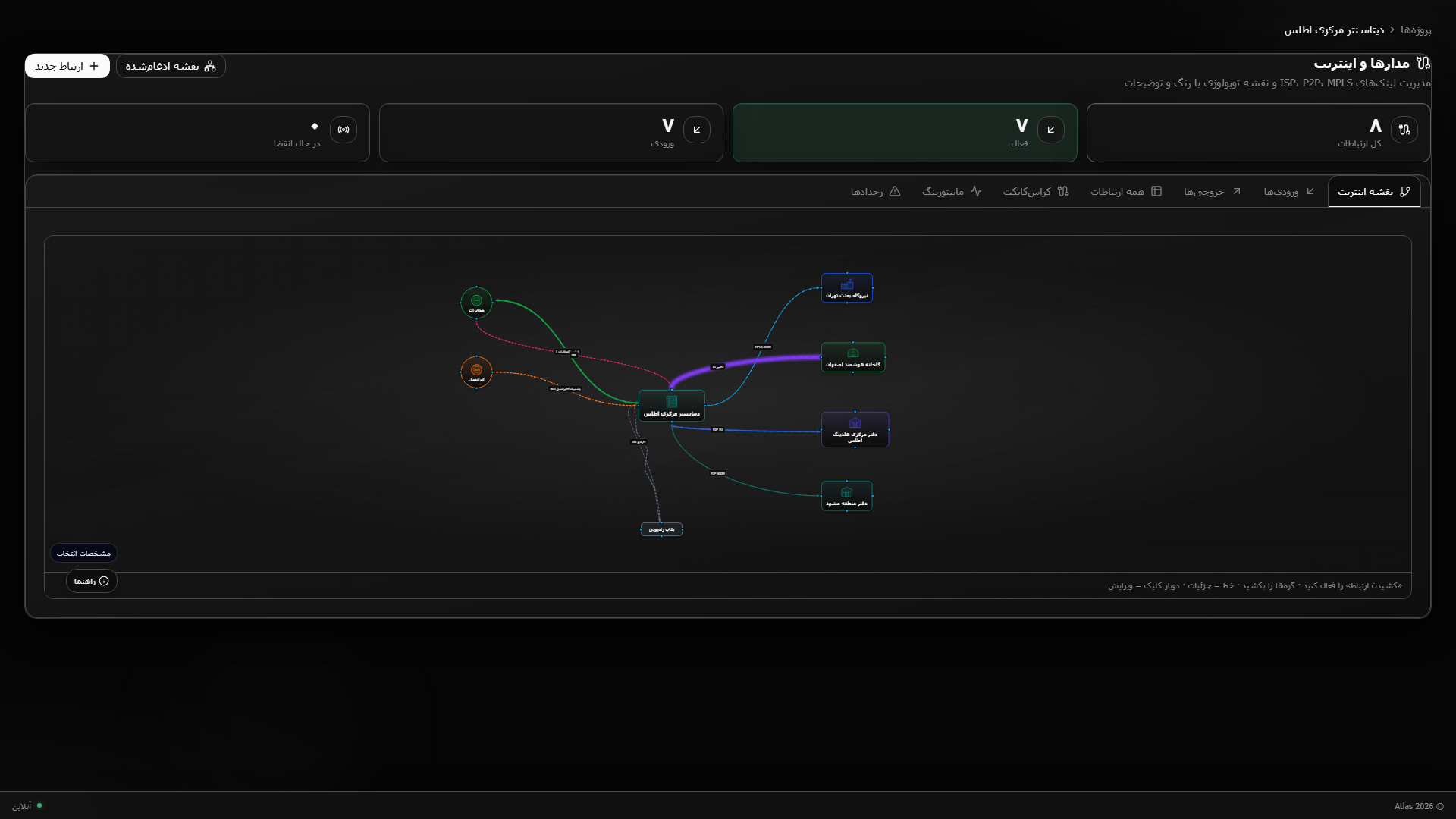
DIA, MPLS, fiber, and branch links as first-class inventory.

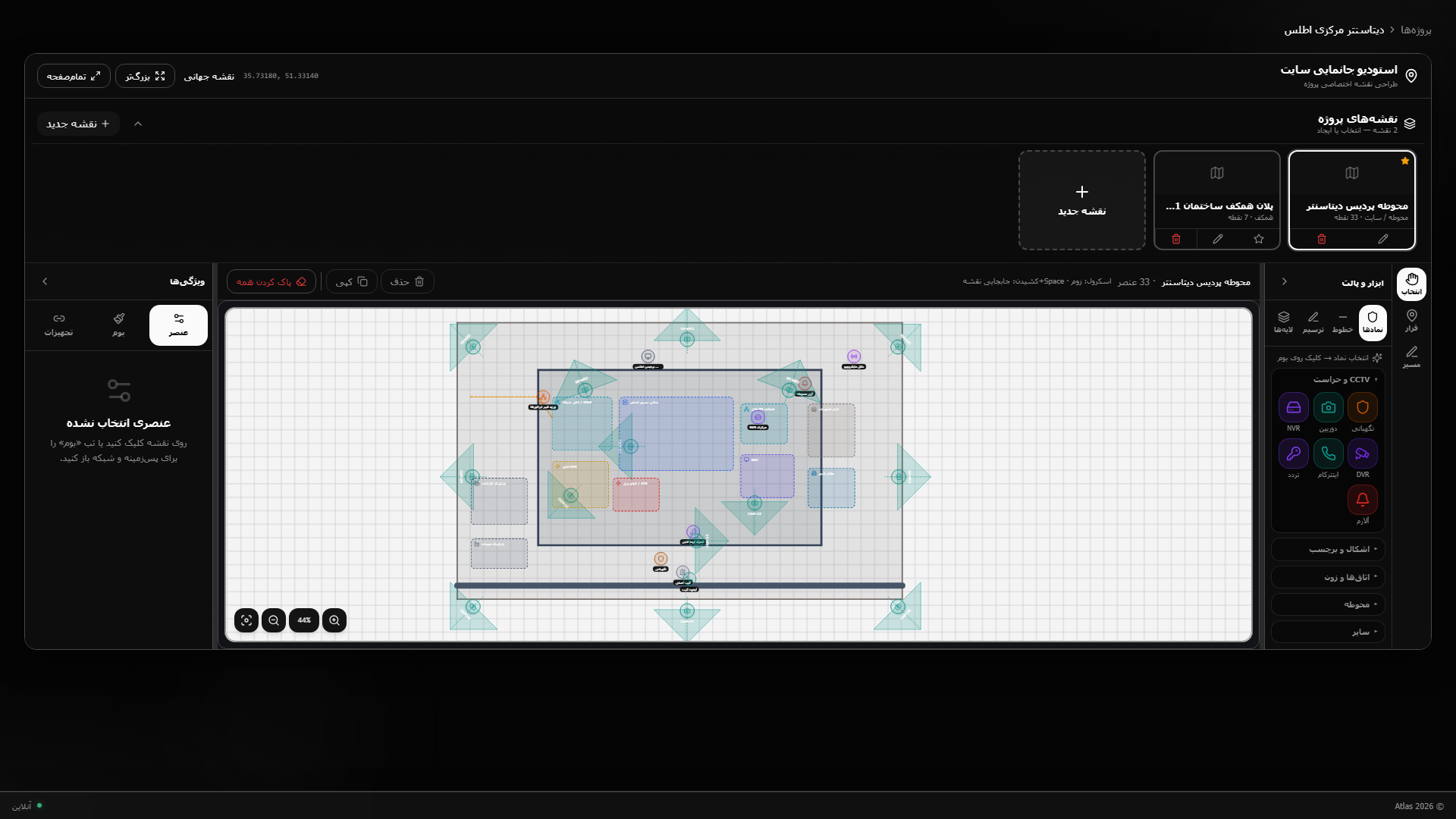
Campus and technical-room layout for facilities and network teams together.

Positioned for organizations that need DCIM + IPAM + NMS in one on‑prem Persian/English-ready operations stack — without stitching five vendor portals.
Adds IPAM, WAN circuits, discovery, and live monitoring beside the 3D hall.
Keeps physical capacity, model library, and site identity next to the graphs.
One console for multi-site holdings — inventory, capacity, and health without Excel drift.
Keep documentation aligned with the live fabric.
Power, space, and port headroom before the next rack lands.
Multiple cities and site types under one org tree.